|
|||
 Your current position: Home >> Analysis of the composition and working principle of nitriding furnace equipment Your current position: Home >> Analysis of the composition and working principle of nitriding furnace equipmentAnalysis of the composition and working principle of nitriding furnace equipmentPublished by:2026-1-13 Categories:Industry news Viewed by: 79 times How can the "heating nitriding" process of a nitriding furnace be accurately achieved? What are the differences in the principles of ion, pit, and deep-pit equipment? Today, the editor from Huzhou Chuangyuan Thermal Engineering Technology Co., Ltd., a manufacturer of iron pot gas nitriding furnaces, will analyze the core components and reaction keys to help you understand technology and select equipment.
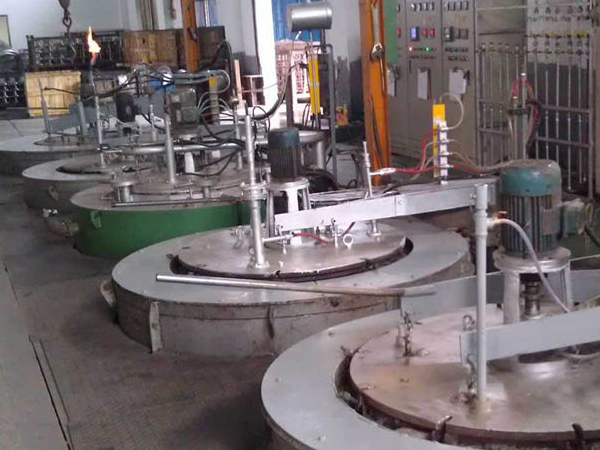
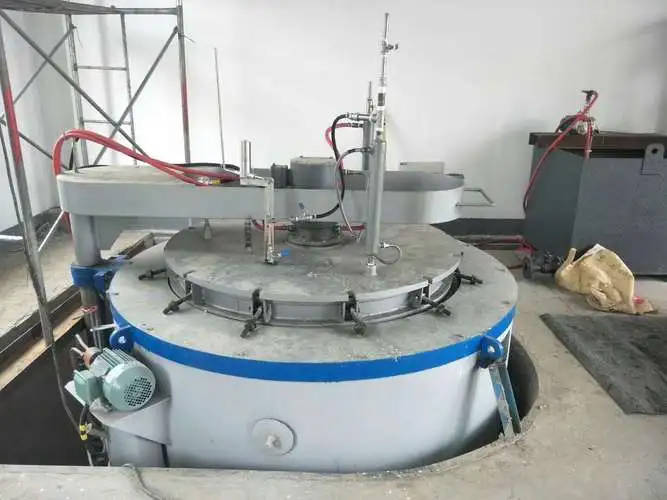
I. Equipment composition and core components The core components of the nitriding furnace are designed around the "heating-nitriding" function, with different types but consistent basic structures. The general structure includes the furnace body (heat-resistant steel/ceramic fiber, thermal insulation), heating system (resistance/gas/electromagnetic induction), gas supply system (control of nitrogen-containing gas flow), and sealing device (maintaining stable atmosphere inside the furnace). The ion nitriding furnace uses the workpiece as the cathode and the furnace body as the anode, with a built-in double-layer heat shield and cooling water interlayer. The vacuum system (rotary vane pump + butterfly valve) adjusts the pressure, and the gas supply system introduces nitrogen and other nitrogen-containing gases The shaft-type nitriding furnace is a vertical shaft type, featuring a stainless steel vacuum tank, a zoned temperature control system, and an atmosphere regulating device. The furnace lid is equipped with a lifting mechanism and a sealing fan, and the furnace lining is a composite structure of lightweight refractory bricks and aluminum silicate fibers. The deep-shaft nitriding furnace is circular, with an inner lining (made of Gr25Ni20/1Gr18Ni9Ti material) featuring an air guide sleeve and a forced circulation fan. The heating element is a 0Gr25AI5 resistance strip, supporting step-wise temperature increase and rapid cooling. II. Nitridation reaction technology process The quality of nitriding reaction relies on precise control of temperature and atmosphere. In terms of temperature, gas nitriding typically operates at 490-650°C (soft nitriding at 560-570°C), while ion nitriding furnaces operate at 500-650°C, with high-temperature models reaching up to 1450°C (for refractory material sintering).
In terms of atmosphere control, nitrogen-containing gases such as nitrogen (ionic nitriding) or ammonia (gas nitriding) are commonly used. These gases are automatically regulated through flowmeters (such as in a drop-in system for pit furnaces) or ionized in a vacuum environment (ionic nitriding furnaces) to ensure stable penetration of nitrogen atoms. Modern equipment, such as the new-type pit furnaces of 2025, achieves a temperature control accuracy of ±5°C. It employs upper and lower zone heating and dynamic adjustment by intelligent instruments to avoid temperature fluctuations that could affect the nitriding effect III. Analysis of Working Principle and Steps 1. Workpiece preparation: Clean the surface (remove oil stains and oxide scale), hang or place it in a material basket/furnace chamber (use a stainless steel material rack for a pit furnace, and use the workpiece directly as the cathode for an ion nitriding furnace). 2. Vacuumization (only for ion nitriding furnaces): Close the furnace body and activate the vacuum system to evacuate to a low-pressure environment, preparing for the ionization of gas. 3. Heating and Ventilation: Heat up to the target temperature (such as 520°C for soft nitriding), while simultaneously introducing nitrogen-containing gas (nitrogen/ammonia), with the flow rate automatically adjusted by the system. 4. Nitriding reaction: In an ion nitriding furnace, nitrogen-containing gas is ionized into nitrogen ions, which bombard the surface of the workpiece (glow discharge effect), and nitrogen atoms penetrate to form a high-hardness nitrided layer. In a pit-type nitriding furnace, ammonia gas decomposes into nitrogen atoms, which are evenly distributed by a forced circulation fan and penetrate into the surface layer of the workpiece (gas nitriding or nitrocarburizing). 5. Cooling: Turn off the heating and gas supply, allow the workpiece to cool naturally or rapidly (deep-well furnaces are equipped with rapid cooling devices), and remove it after processing is complete.
|

|
Huzhou Chuangyuan Thermal Technology Co., Ltd
|
| Copyright © 2023 Huzhou Chuangyuan Thermal Technology Co., Ltd all reserved | Web Admin >> |
 National hotline: 135-1124-6523